A Summer on the Roof of the World
- By Laurent Berthod – IG : @laurent_berthod
- Download GPS recording (still to be mapped in OSM)
Creating the Route
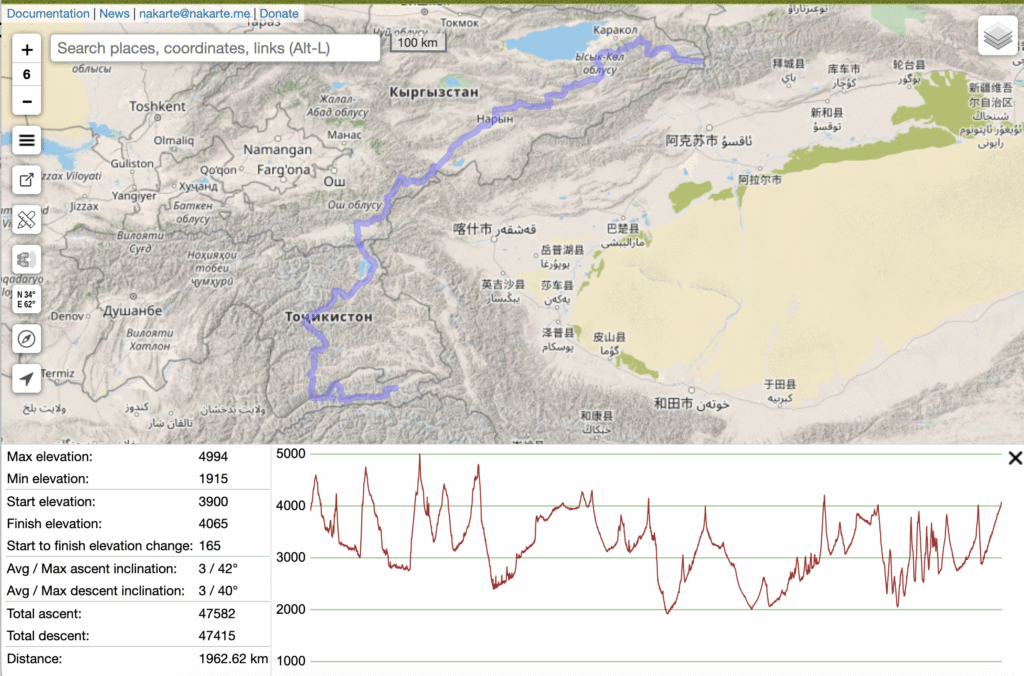
Shortly after completing my 2023-24 winter Himalayan Traverse (2600km, 126 000m+), https://explorersweb.com/hiking-india-to-nepal/, I set my sights on its lesser-known neighbors : the Pamir and Tian Shan ranges. Sparsely populated, extremely vast and still relatively unknown, the region was a natural choice for my next project. When coming up with an idea for an adventure, I like to plan the journey by imagining a story in my mind, a bit like how one would go about making a film or a book. I try to divide it into chapters, each with their own atmospheres, encounters and challenges. To thread a coherent narrative, I am looking to craft a continuous line that flows through the various landscapes and connects remote settlements, creating opportunities to naturally meet locals along the way. Having a defined path gives me a clear sense of direction and serves as a foundation upon which I can let the unknown happen.
Preparation
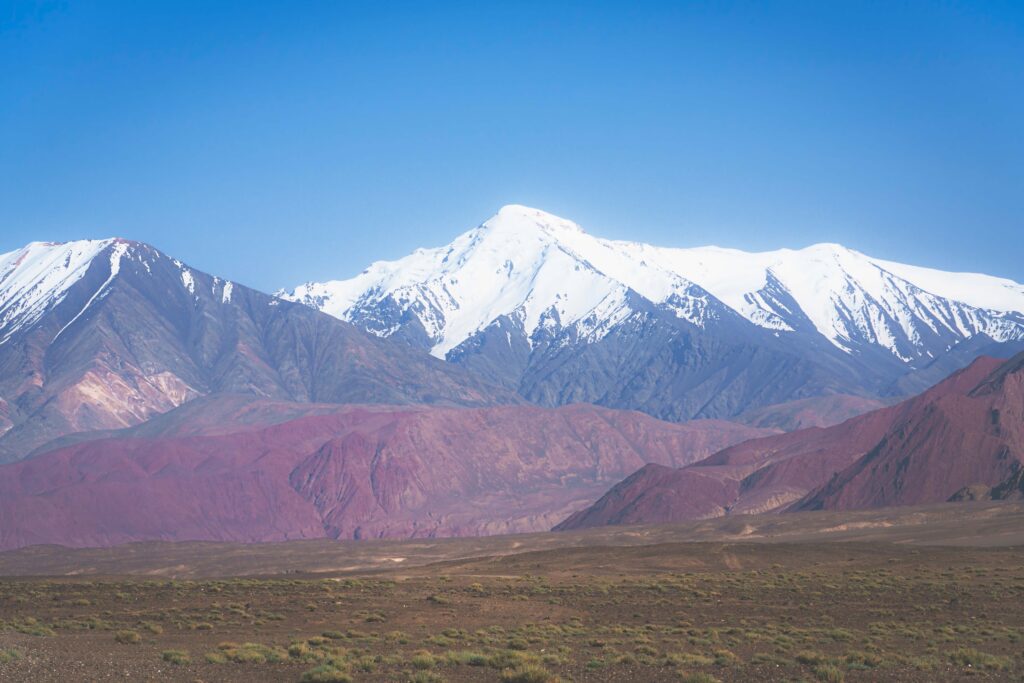
Shaping the vision I had into reality meant many hours of cross-referencing OSM maps with Soviet-era topographic sheets, as well as with satellite imagery and Google Earth. For the more exploratory sections, I was searching for passes and shepherd trails that rarely show up cleanly on any single source. My pathfinding process is in many ways similar to Peter’s, which has been extensively documented here, on his website. Nonetheless, even with a well-researched itinerary, no map fully replaces on-site judgment. Snowstorms, sandstorms, permit issues, lack of water and food were all obstacles I had to overcome along the way. Adaptability is key in the mountains and I relied on both instinct and experience when dealing with high-stakes sections like tough river crossings and precarious climbs up steep scree slopes.
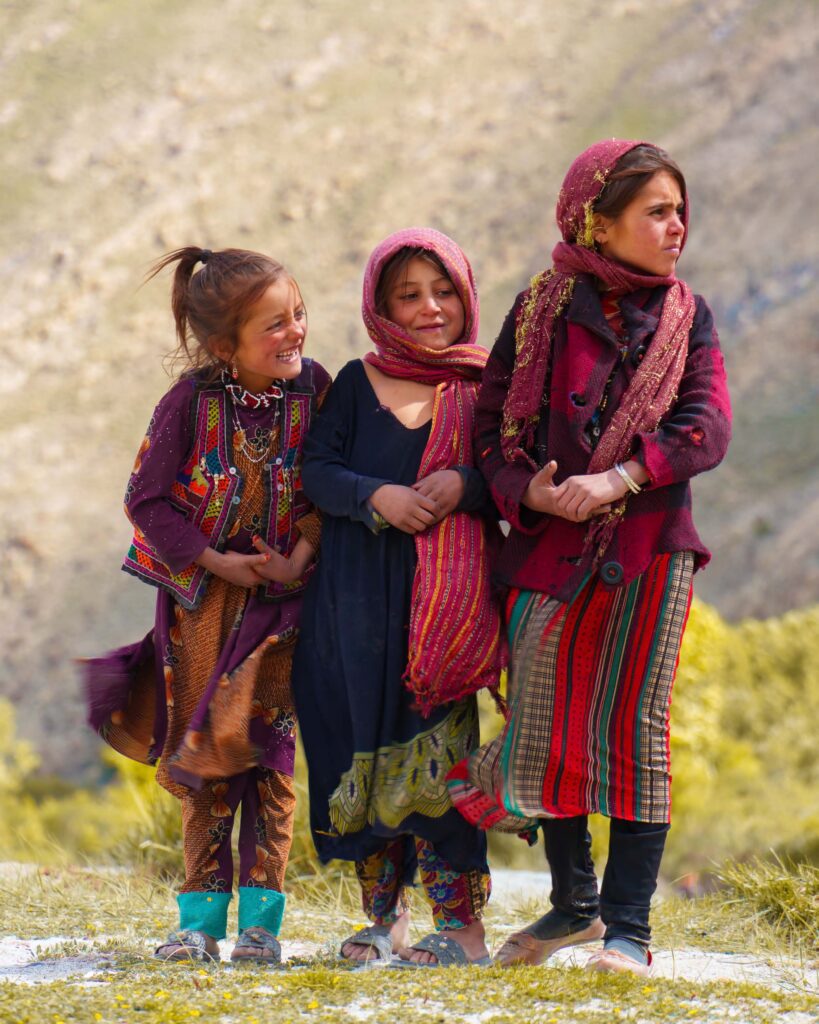
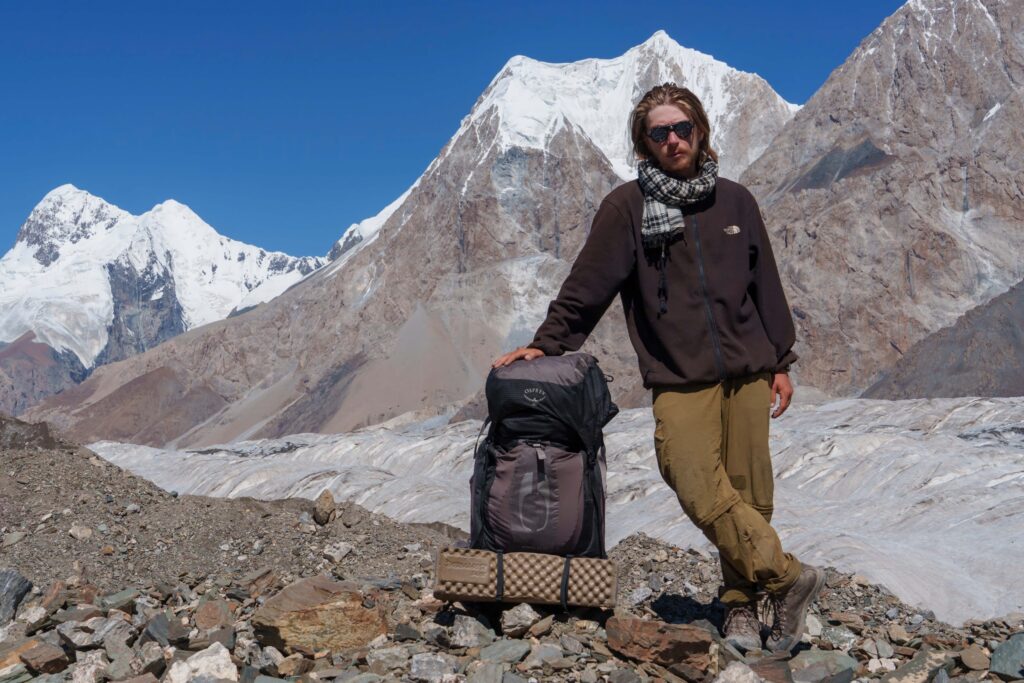
Some stretches of the route required carrying up to a week’s worth of food and more than four liters of water. I therefore opted for a 65L backpack, much bigger than what I would normally choose and brought the bare minimum gear, including some filming equipment to document the expedition. To prepare, I spent months rucking and running in zone 2 to build a strong foundation for consecutive 30km+ days on challenging terrain at high altitude.
Afghanistan – 300km
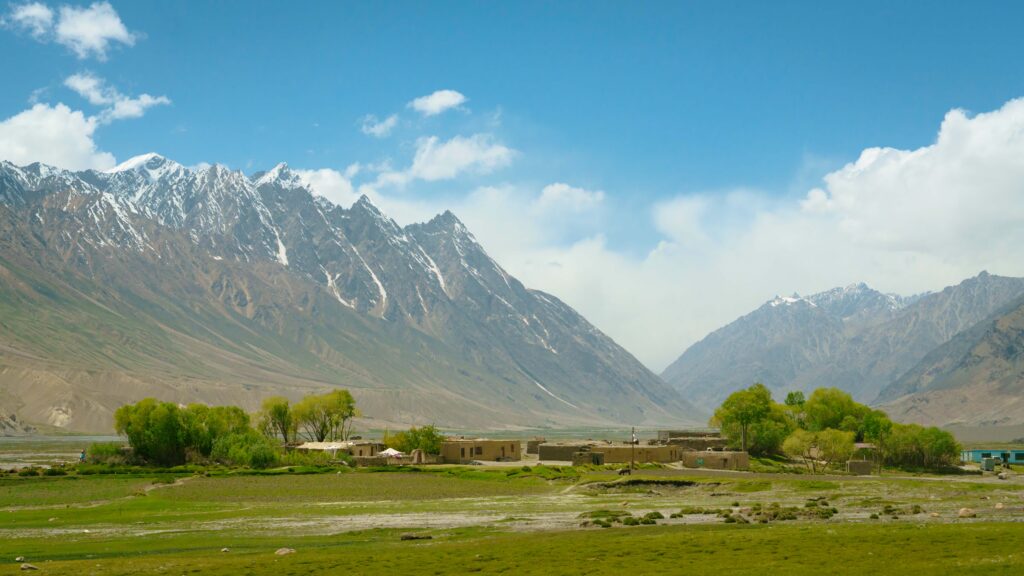
Steeped in history with more than a thousand years of caravan trade and a unique blend of cultures, Afghanistan’s Wakhan corridor felt like the right place to begin this journey. Located at the heart of the ancient Silk Road, it’s a land that was once trodden by the likes of Alexander the Great and Marco Polo…
Getting inside the country was an adventure of its own and even though I prepared as much as I could, I still had to adapt constantly to the constraints that come with traveling to such a sensitive region of the world. I spent hours drinking tea with Taliban officers to get permits, went through dozens of checkpoints on the roads and even had to hire a local Wakhi to follow me due to a last-minute rule change that made unguided trekking illegal in the Wakhan. Unpredictability is the norm in Afghanistan and I had to come to terms with the fact that a lot of things were outside my control.
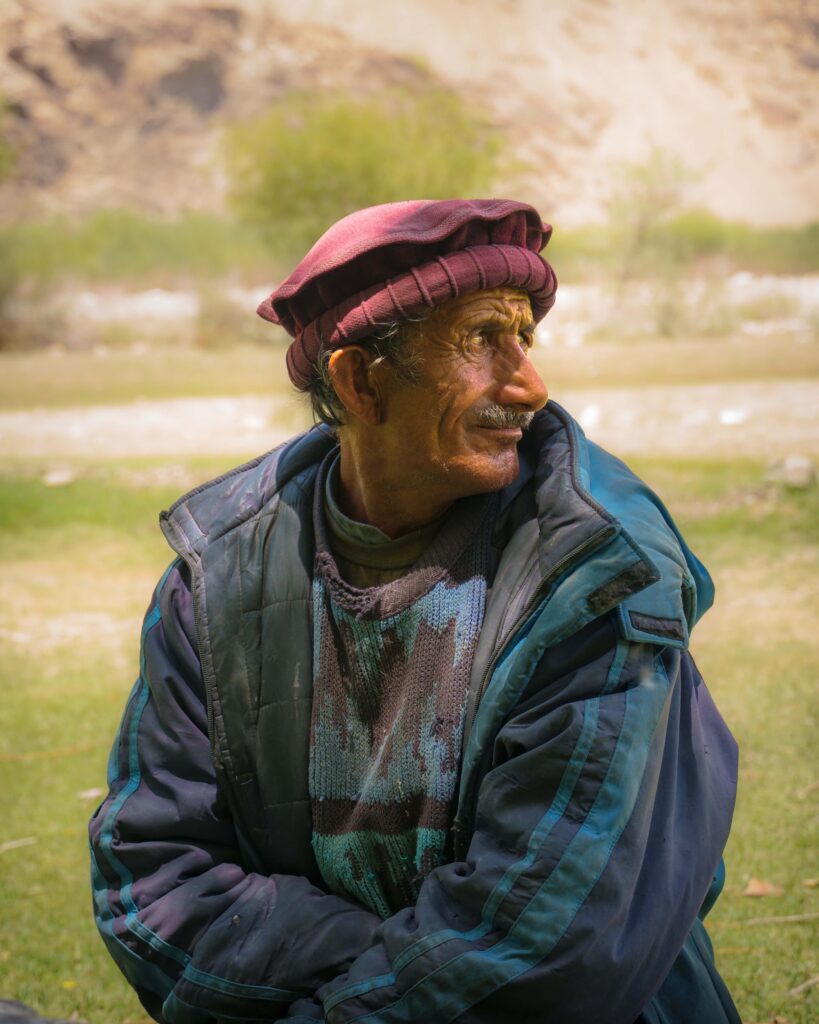
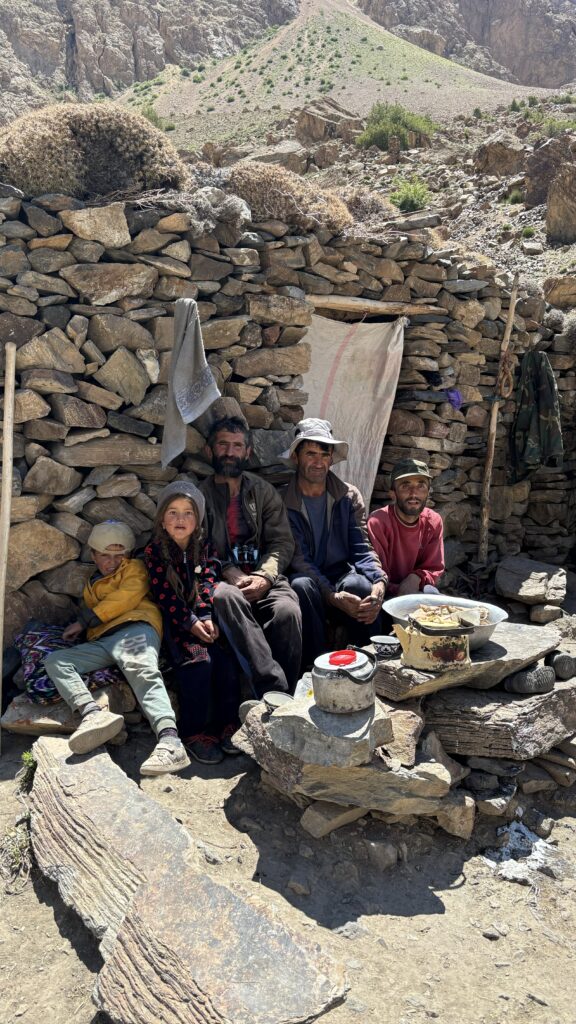
In a sense, all these barriers shield the Wakhan from the rest of the world. Entering the corridor feels like stepping back in time, where life is almost the same as it was hundreds of years ago. Barely touched by modernity, communities are very close-knit and daily routine is centered around ancestral ways : farming, herding, trading, taking care of the home… As I shared time with many different families, I came to witness the peaceful unfolding of a lifestyle so different from my own. What struck me most is just how much they smiled and laughed throughout their day, exuding joyfulness and vitality despite living in very harsh conditions. I sensed that they have what many spend a lifetime chasing…
Tajikistan – 500km
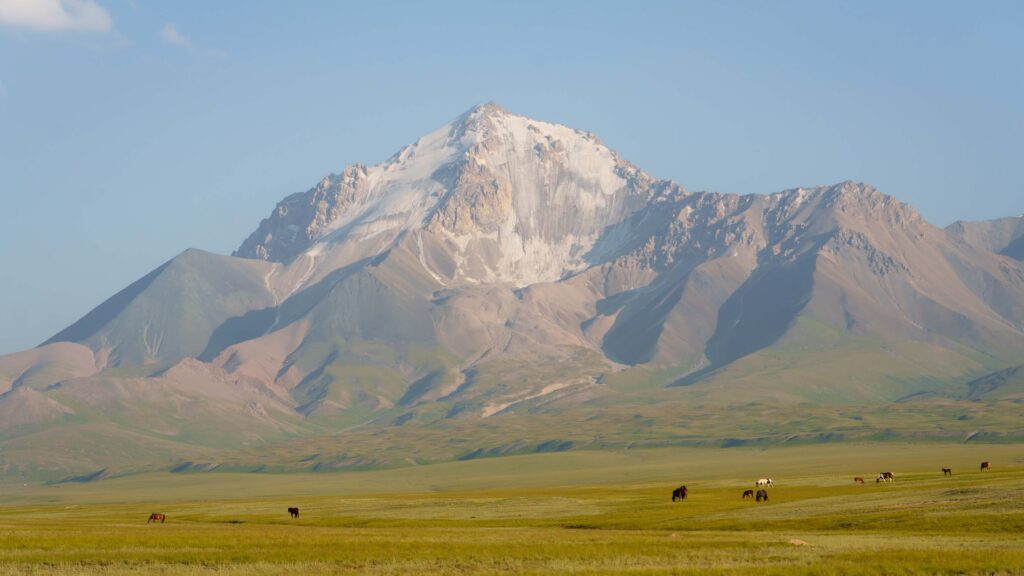
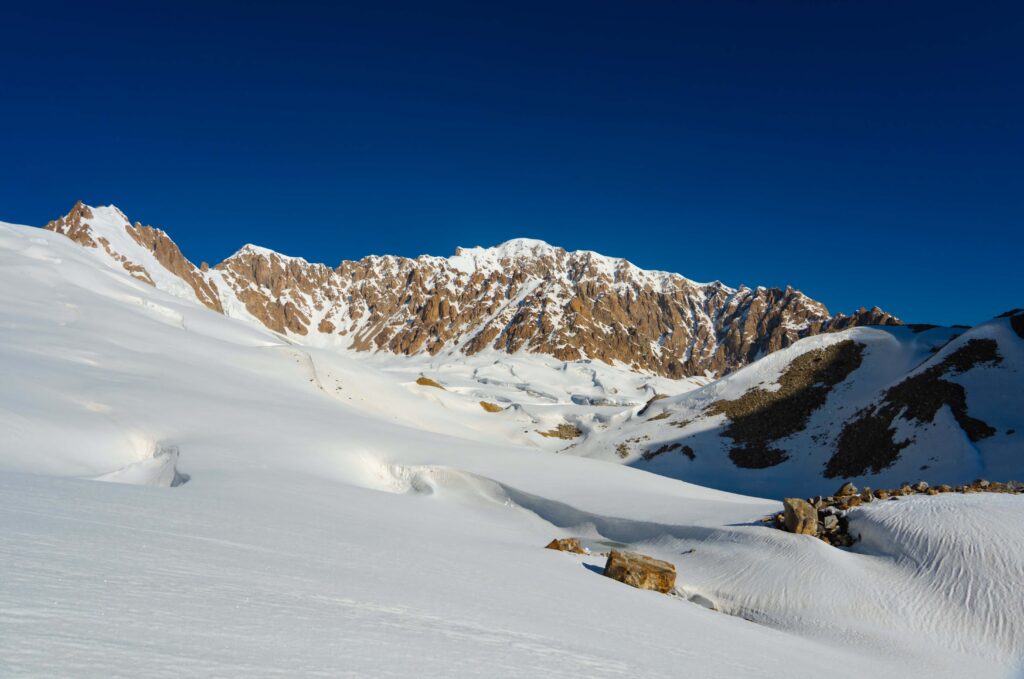
After two weeks of traversing the Wakhan, I was heading north through Tajikistan’s Gorno-Badakshan province, one of the most mountainous regions in the world. Deep June snow made some of the passes very challenging to cross and encounters were less frequent than they’d been in Afghanistan. Most nights I slept in my tent, which was set up inside of dusty valleys, on glaciers or at the foot of snowy peaks. Personally, I love walking alone as it invites complete immersion in the landscape and brings forth a kind of focused presence, a frictionless state of being unlocked by hours of sustained effort. I often lost track of time and simply found myself flowing on the trail, one step folding smoothly into the next.
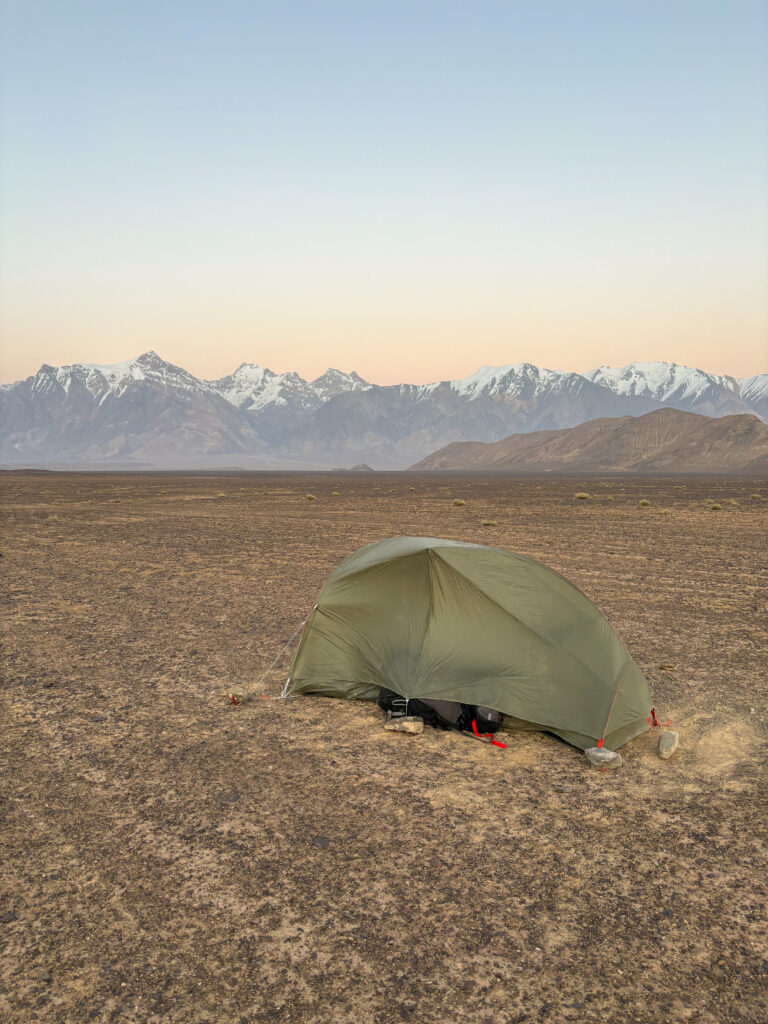
However, fewer people also meant fewer chances to resupply and water was especially scarce at times, making the rare encounters with shepherds essential to keep moving. Chaï, yogurt and bread were blessed gifts after days out in the scorching sun and my rudimentary understanding of Russian allowed for meaningful conversations to happen. I learned about life out on the Pamir plateaux and how most of the Tajiks I met longed for the Soviet days… a time they remembered for steadier jobs, functioning schools and affordable healthcare that reached even the farthest regions.
Kyrgyzstan – 1200km
As I crossed the northern Tajik border to enter Kyrgyzstan, dust and sand were suddenly replaced by a green realm filled with yurts, packs of horses and rolling meadows. Wildflowers spread out endlessly over the valleys and water was at last plentiful. The country is home to some of the most aesthetic landscapes I have ever seen and each day offered its own unique scenery. Sun-drenched horizons, vibrant colors and chiseled peaks… it felt at times as though I was walking through a painter’s dream.
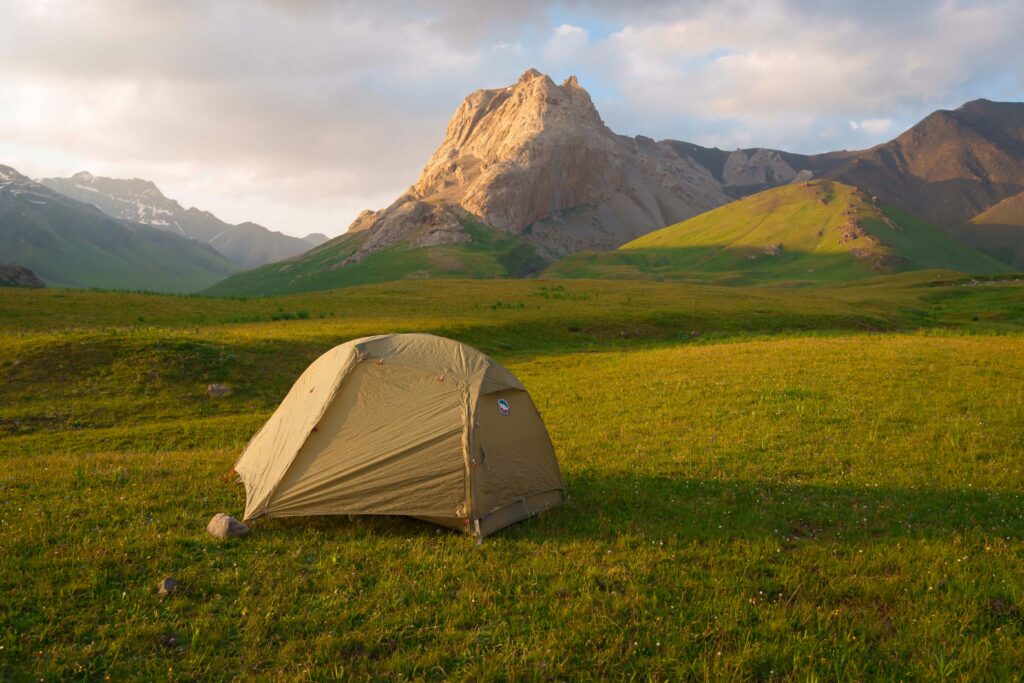
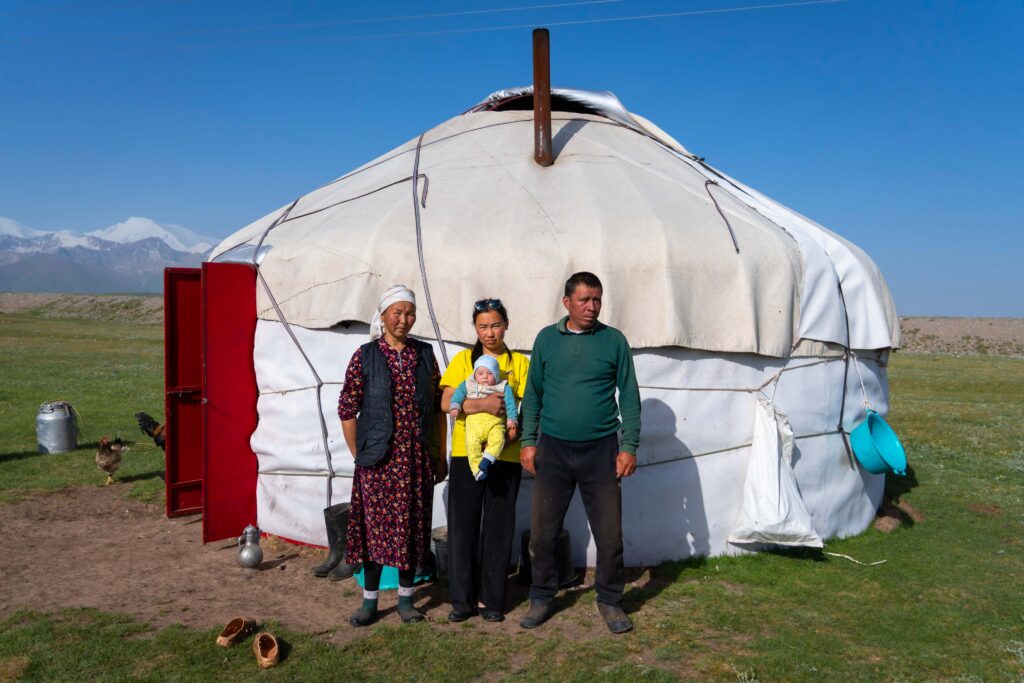
In the summer, thousands of Kyrgyz families migrate to alpine pastures to feed their flocks of sheep and their horses. As I traveled from one yurt to the next, I had the privilege of sharing meals and countless cups of tea with a few of them. Through the many conversations I had, what always stood out to me was their love and pride for the nomadic lifestyle they embodied. Freedom of movement is so deeply valued by the Kyrgyz that, surprisingly, no one ever questioned why I was crossing their country on foot. For them, roaming freely is simply a natural way of being and sleeping in a tent is perfectly normal. I must admit I have never felt such freedom anywhere else. It is truly special to experience…
Lenin Peak – 7134m
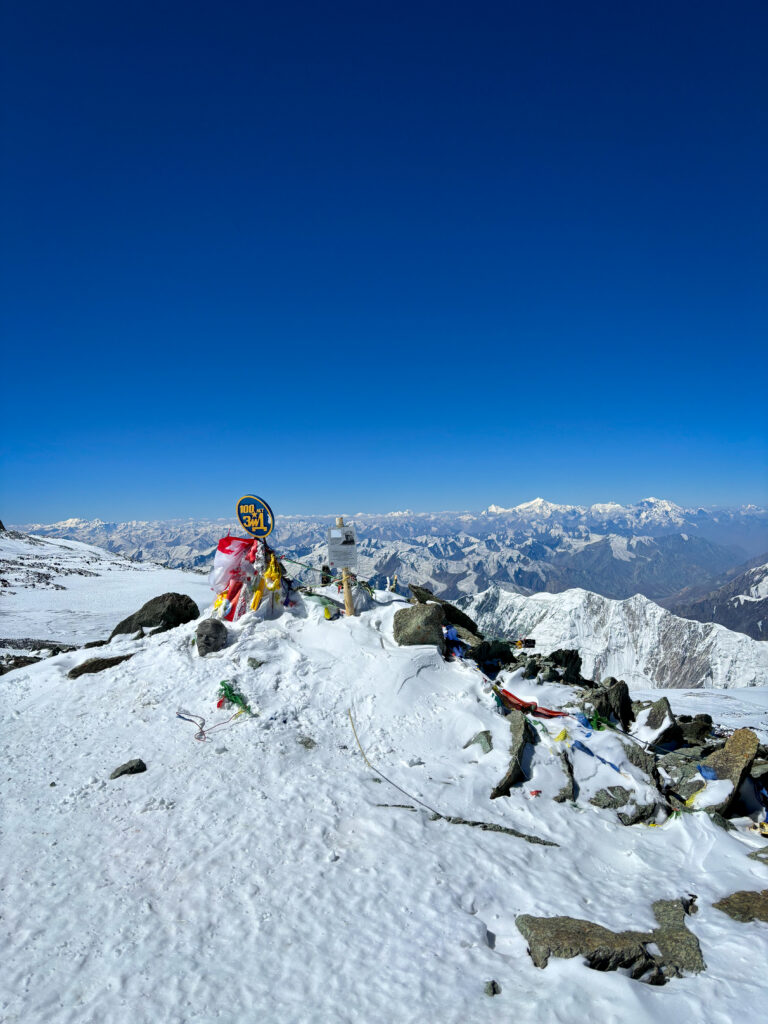
After a 60km finale up the entire length of the Inylchek glacier, the sixth-longest in the world, a rattling Soviet Mi-8 helicopter lifted me out towards mainland, where I hitchhiked my way back towards Kyrgyzstan’s second highest mountain : Lenin Peak. Although not the most technical summit, it’s still a solid introduction to very high altitude mountaineering and a fitting end to this journey.
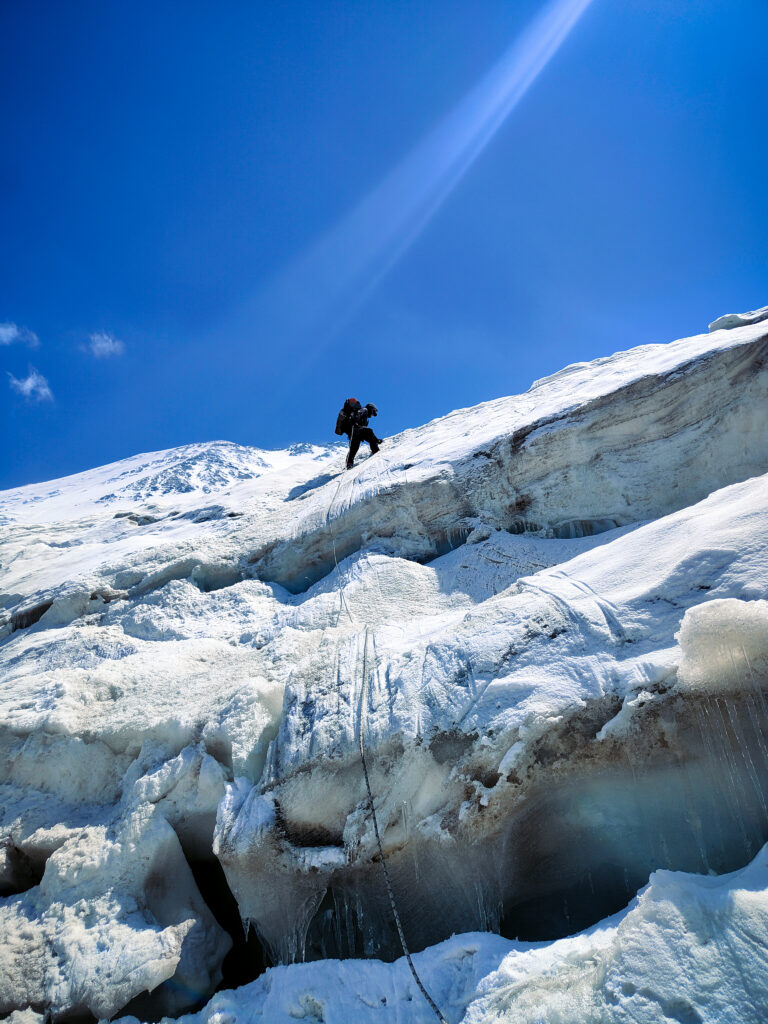
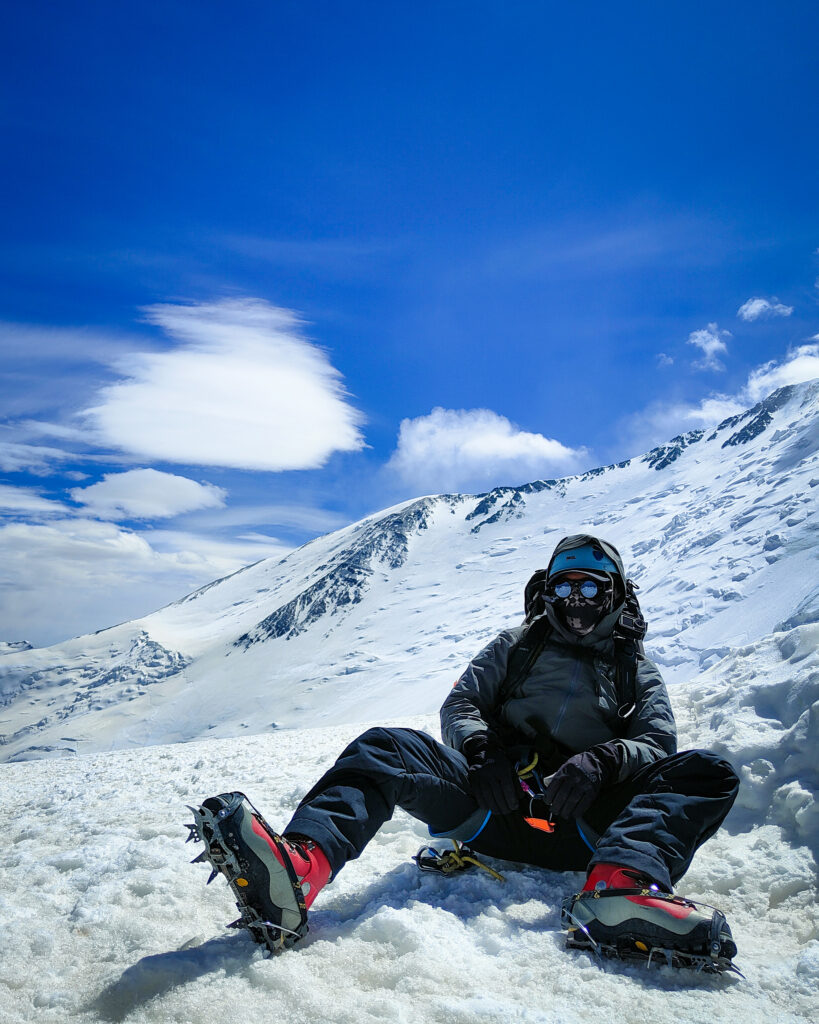
A few days before I arrived, almost no one summited due to extreme winds. Judging by the numerous tales of frostbites, hallucinations and severe accidents that were spreading through the camps, chances of success this late in the season looked pretty slim. Fortunately, I was shaped by months of hiking and on my seventh day of climbing, a brief weather window opened. Starting at midnight from Camp 3, I slowly made my way up, following the classic North Face route. After a few hours of steady progress, sunrays started piercing gently through the darkness, soon evolving into a blazing sunrise. I reached the summit under a clear morning sky, unveiling a horizon so vast it barely felt real. As I was sizing up the mountains which I had spent months crossing, I could experience from above what nineteenth-century explorers rightly named the Roof of the World…
Your Own Way
Everyone is looking for something different when they set out on long adventures and I don’t think there’s a single right way to go about doing it. Personally, intuition about what I wanted to experience guided my path and my choices. Inspiration came from knowing myself but also from inputs I gathered when researching the countries that drew my curiosity. Having a plan is important, but so is learning to let go of the desire to control everything. I think welcoming the unexpected is what allows the road you take to shape itself into a journey that is unique and interesting, one that is entirely your own. In my experience, embracing the unknown often leads to meaningful places both in the outside world and within yourself.
My only advice ? Head out into nature and explore it in your own way, something interesting is bound to happen…